

Medically reviewed by Matthew Darling, DO — Medical Director, IV Bird
If you’ve searched for an iv drip clinic lately, you’ve probably noticed you now have two very different ways to get IV hydration and vitamin infusions: go into a clinic, or have a licensed clinician come to you.
Both can be legitimate, safe options when they’re run well. The “better” choice depends less on the drip name and more on practical factors like how you feel today, how fast you need care, your medical history, and the clinical standards of the provider.
What’s the difference, really?
IV drip clinic
An IV drip clinic is a brick-and-mortar location where you travel to receive an infusion. You check in, get screened, have an IV started, and complete the drip in a treatment chair.
Mobile IV therapy
Mobile IV therapy delivers the same core service (fluids and optional vitamins or add-ins) to your location, like your home, hotel, office, or event. A clinician brings supplies, performs screening and vitals, starts the IV using sterile technique, monitors you during the infusion, and provides aftercare instructions.
The key point: “Mobile” should change the location, not the safety standards.
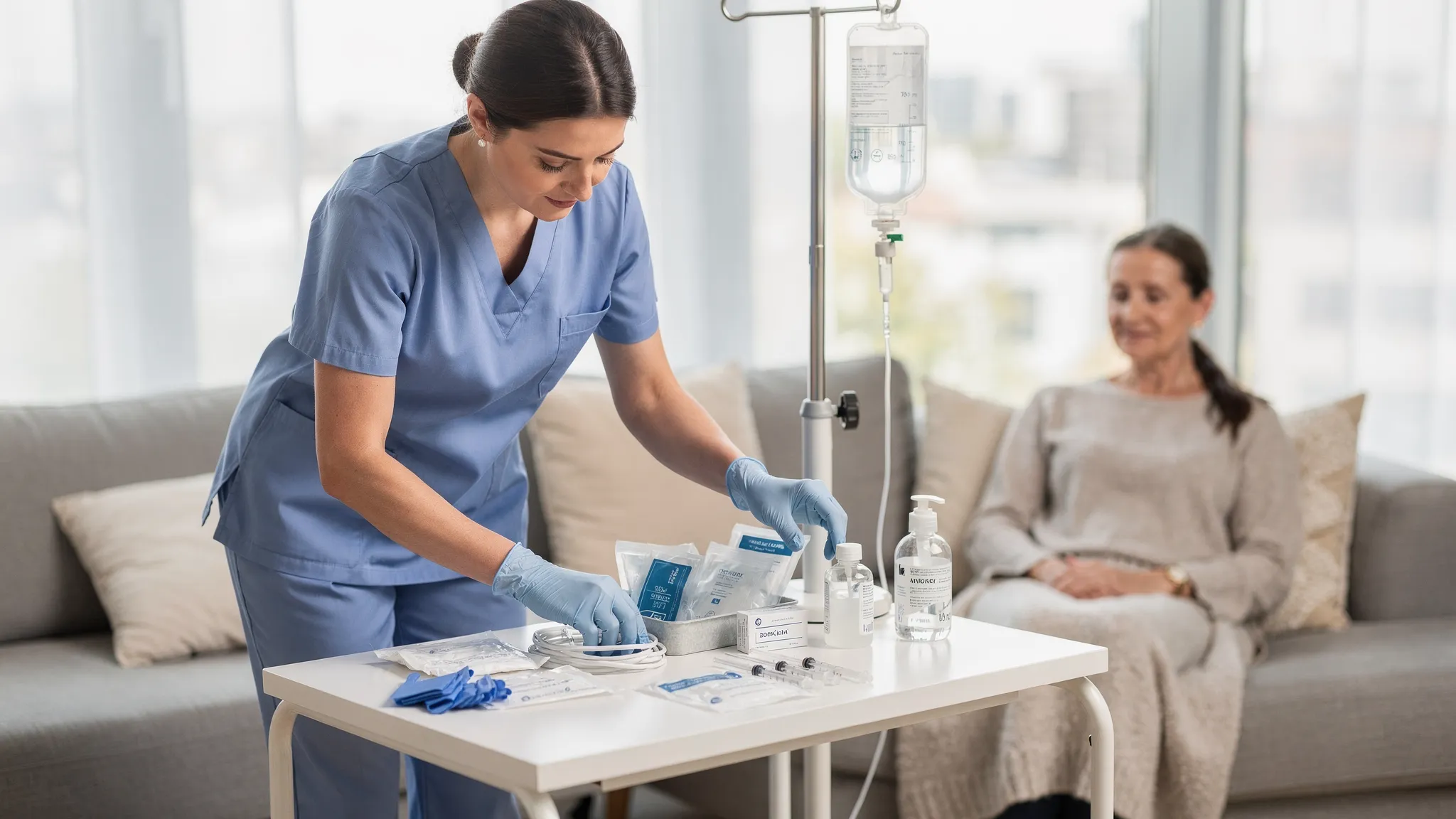
IV drip clinic vs mobile IV: side-by-side comparison
| Category | IV drip clinic | Mobile IV therapy |
|---|---|---|
| Convenience | You commute, park, wait, then commute home | Care comes to you, less disruption |
| Best for | People who prefer a clinical environment or want to be in a facility setting | Busy schedules, post-event recovery, travel fatigue, group bookings |
| Comfort & privacy | Shared clinic space, limited control over environment | Your space, your couch, more privacy |
| Timing | Depends on clinic hours and how close you are | Can be ideal when you feel too wiped to drive |
| “Day-after” practicality | You still have to get yourself there when you feel bad | You can rest during and after the infusion |
| Safety fundamentals (when done right) | Screening, vitals, sterile IV start, monitoring, escalation plan | Same standards should apply, even outside a clinic |
When an IV drip clinic can be the better choice
A clinic setting can make sense in a few common scenarios.
You want a facility-based environment
Some people simply feel more comfortable in a dedicated clinical space, especially if they’re anxious about needles or want a more traditional healthcare vibe.
You’re unsure whether IV therapy is appropriate for you
If you have a complicated medical history (for example, certain heart or kidney conditions, fluid restrictions, pregnancy, or multiple medications), you may want a higher-touch clinical evaluation before you book any wellness infusion, whether mobile or in-clinic.
You need a different level of care than a wellness IV service
If you have red-flag symptoms, an IV drip clinic is not automatically the answer either. In many cases, urgent care or the ER is more appropriate.
Seek urgent medical evaluation (not a wellness IV) if you have symptoms such as:
- Chest pain, severe shortness of breath, fainting, confusion
- Severe dehydration with inability to keep fluids down
- Bloody vomit or stool
- Severe allergic reaction symptoms (swelling of face or throat, wheezing)
When mobile IV is usually the better choice
Mobile IV tends to shine when the issue is less about the building and more about recovery, time, and logistics.
You’re dehydrated, run down, or hungover and don’t want to drive
When you feel terrible, the hardest part of an in-clinic visit is often the “before and after”: getting dressed, finding transportation, sitting in a lobby, then getting home.
Mobile care can remove those friction points, which is a big deal if you’re trying to get functional quickly.
You’re a busy professional who can’t lose half a day
A mobile visit can fit into a workday with fewer interruptions. You still need time for screening and the infusion itself, but you can often do it without commuting and without rearranging your entire schedule.
You’re hosting a group (events, weddings, bachelor and bachelorette weekends)
Groups are one of the clearest use cases for mobile. Coordinating transportation for multiple people who feel drained after a long night (or a long travel day) is rarely fun.
You’re traveling or staying in a hotel
Travel fatigue, dry cabin air, long days on your feet, and inconsistent meals can leave people feeling depleted. Mobile IV lets you recover where you’re staying rather than trying to locate an unfamiliar clinic.
The deciding factor in either setting: clinical quality and safety
Whether you choose an iv drip clinic or a mobile service, the safety questions are almost identical.
What high-quality IV care should include
A reputable provider should be able to clearly explain their process, including:
- A real pre-infusion intake (health history, medications, allergies, recent symptoms)
- Vitals before starting (at minimum blood pressure and heart rate)
- Sterile IV start technique and single-use supplies
- Monitoring during the infusion
- Clear aftercare instructions
- A plan for side effects and escalation (what they do if you feel worse, not better)
Who is administering the IV
IV therapy is a clinical procedure. You want appropriately licensed, experienced clinicians.
For example, IV Bird’s mobile IV therapy in Austin is administered by registered nurses, which matters because skills like vein access, assessment, and patient monitoring are not optional details, they’re the core of safe care.
If you’re comparing options, it’s reasonable to ask:
- Who will be starting the IV and monitoring me?
- What credentials do they have?
- Is there medical oversight and clear protocols?
Ingredient transparency and realistic claims
A trustworthy provider should tell you what’s in the bag, what the intended effect is, and what’s uncertain.
Some benefits (like rapid fluid repletion when you truly need hydration) are straightforward. Other claims (especially around “detox,” guaranteed immune prevention, or dramatic cosmetic changes) should be discussed carefully and conservatively.
Cost and time: what people often forget to calculate
Price matters, but so does the total “cost to get care.” The cheaper option on a menu is not always cheaper in real life.
Clinic visits often have hidden time costs
Even if the drip itself takes a similar amount of time, clinics usually add:
- Commute time
- Parking and walking time
- Waiting room time
If you’re sick, exhausted, or hungover, that extra friction can be the difference between “I’ll do it” and “I’ll just suffer through the day.”
Mobile visits can include convenience-related fees
Mobile services may charge for travel or on-site service. Whether that’s “worth it” depends on:
- How far you are from an iv drip clinic
- Whether you’d need rideshare
- Whether you’re booking as a group (convenience compounds with multiple people)
A simple decision framework (choose the setting that fits the day)
Instead of debating “clinic vs mobile” in the abstract, decide based on your situation.
How well can I safely get myself to a clinic today? If driving is a bad idea because you’re too dizzy, too nauseated, or too impaired, mobile may be the safer practical choice, or you may need medical evaluation.
Do I need privacy and rest while I recover? If the goal is to rest immediately during and after the drip, at-home care wins.
Am I doing this for convenience or because I’m worried about my health? If you’re worried you may be seriously ill, don’t use a wellness IV as a substitute for diagnostics.
Do I have conditions that require extra medical clearance? If yes, talk to your primary clinician (or get medical clearance) before any wellness infusion.
Which provider can clearly explain their screening and safety protocols? Choose the provider that can answer questions directly, not the one with the flashiest marketing.
A note on mental health and “feeling better fast”
Many people book IVs during periods of intense stress, burnout, poor sleep, or anxiety because they want quick relief. Hydration can help you feel more functional, but it’s not a treatment for underlying mental health conditions.
If persistent anxiety, depression, ADHD symptoms, panic, or cognitive changes are affecting your daily life, consider adding evidence-based support from a licensed mental health professional. For readers who need that kind of care, comprehensive psychiatric services can be a useful starting point to explore evaluation and treatment options.
What this means for Austin, TX specifically
Austin has a few realities that make mobile IV especially practical:
- Heat and outdoor activity can increase dehydration risk, especially in warmer months
- Big weekends (festivals, lake days, race events) often create group recovery needs
- Traffic and parking can turn a “quick appointment” into a longer ordeal
If you’re choosing between an iv drip clinic and mobile IV in Austin, the “best” option is often the one that lets you recover safely with the least strain.
Bottom line: which is better?
Mobile IV is typically better for convenience, privacy, and post-event or travel recovery, assuming the provider is clinically rigorous.
An iv drip clinic can be better if you strongly prefer a facility setting, or you want the structure of going to a dedicated location.
If you’re in Austin and you want nurse-administered IV therapy delivered to your door, IV Bird offers mobile IV hydration and vitamin drips with treatments tailored to goals like recovery, wellness, immunity support, performance, and NAD+ therapy. You can learn more about how mobile visits work here: IV Therapy Mobile: Care at Your Doorstep.