IV hydration therapy sits in a tricky spot between everyday self-care and clinical care. For some people, it’s an efficient way to recover when oral fluids are not cutting it. For others, it’s an expensive detour from the basics (sleep, electrolytes, food, and time). The difference comes down to one thing: your situation and the severity of what you’re dealing with.
This guide breaks down when IV hydration therapy is actually worth it, when it’s not, and how to make the decision safely, especially in Austin where heat, events, travel, and active lifestyles can make dehydration a frequent problem.
What IV hydration therapy really does (and what it can’t)
At its core, IV hydration therapy delivers fluids directly into the bloodstream through a peripheral IV. Most wellness hydration drips are built around sterile fluids (often saline or similar), electrolytes, and sometimes vitamins or other add-ins depending on goals and screening.
That “direct to bloodstream” part matters when your gastrointestinal tract is the bottleneck. If you’re nauseated, vomiting, or simply cannot keep up with oral intake, IV fluids can restore circulating volume faster than sipping water.
What IV hydration therapy cannot do is replace medical diagnosis or magically “flush toxins.” It also won’t outwork consistent habits. If you are mildly dehydrated and can drink, oral rehydration is usually the first-line option because it’s effective, inexpensive, and low risk.
A helpful mental model is this:
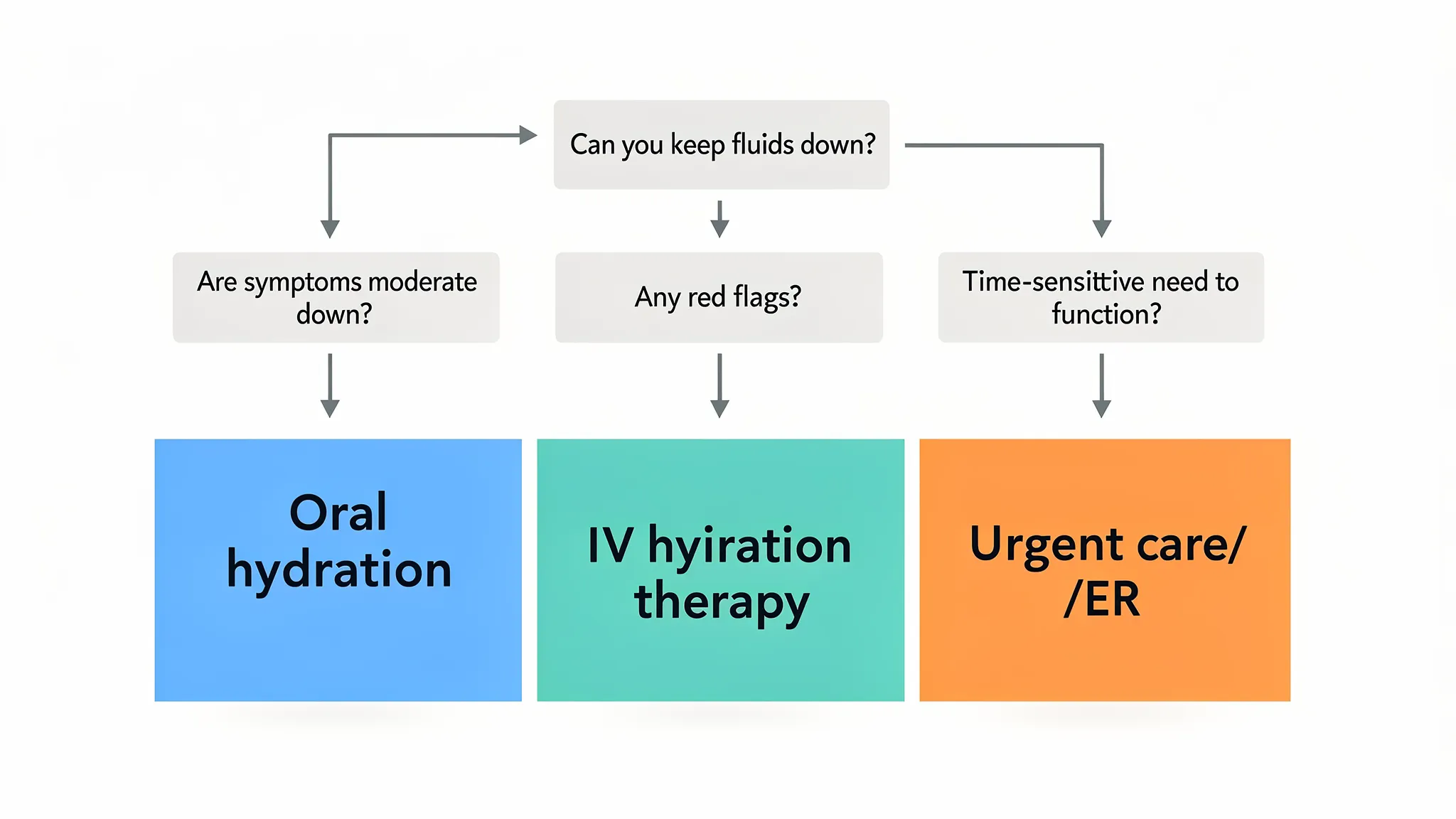
- Oral hydration is best for mild dehydration and prevention.
- IV hydration can be worth it when oral hydration is failing or time is a critical constraint.
- Urgent care or ER is the right call when symptoms suggest severe dehydration, heat illness, or another serious condition.
The “worth it” test: 3 questions to ask yourself
Before you book an IV, ask:
1) Can I tolerate fluids by mouth?
If you can comfortably drink and keep fluids down, try oral rehydration first (water plus electrolytes, not just plain water). If you can’t (vomiting, significant nausea, migraine-related nausea, stomach bug symptoms), IV hydration may offer a more practical path to rehydration.
2) Do I need to feel functional quickly for a real reason?
“Worth it” is often about opportunity cost. If you’re facing a tight turnaround (work presentation, travel day, wedding responsibilities, multi-day festival weekend, competition) and dehydration symptoms are impairing function, then the convenience and speed of IV fluids can be valuable.
3) Are there red flags that make this a medical problem, not a wellness problem?
If there are red flags, don’t try to “treat around” them with a drip. Seek urgent evaluation.
According to the CDC’s heat guidance, heat-related illness can escalate quickly, and confusion, fainting, or symptoms of heat stroke require emergency response, not a wellness infusion. See CDC heat safety information for warning signs and response steps via the CDC Heat and Health guidance.
When IV hydration therapy is worth it (common scenarios)
IV hydration tends to be most defensible when it solves a real constraint: you need fluids and electrolytes, and oral intake is too slow, not possible, or not reliable.
Here are common situations where many people find it worth considering.
Heat exposure and dehydration in Austin
Austin heat plus outdoor time (trail runs, Lake Travis days, festivals, job sites) can create dehydration faster than people expect, especially if alcohol is involved or you’re not acclimated.
IV hydration may be worth considering when:
- You’ve been in the heat for hours and symptoms are escalating despite electrolyte drinks.
- You’re cramping, lightheaded, or experiencing significant fatigue that feels dehydration-driven.
- You’re trying to recover without another long drive, waiting room, or delay.
Important: if you have confusion, fainting, very high body temperature, or stop sweating in the heat, that can signal dangerous heat illness. That is not a mobile IV situation.
Hangover with significant dehydration (especially with nausea)
A hangover is not just “dehydration,” but dehydration is a major component for many people. If you’re mildly hungover, oral fluids, electrolytes, a meal, and sleep typically do the job.
IV hydration can become more compelling when:
- You’re vomiting or too nauseated to keep fluids down.
- You’re markedly dehydrated (dry mouth, dizziness, headache that worsens standing).
- You have a time-sensitive need to be functional.
Stomach bug or travel-related dehydration
When a stomach bug causes vomiting or diarrhea, oral rehydration is still first-line if you can keep it down. But if you’re losing fluids faster than you can replace them, IV hydration may be a practical escalation.
If you want a clinically grounded reference point on oral rehydration, the WHO overview of oral rehydration solution explains why it works and why it’s the starting point in many dehydration cases.
Post-event recovery when you’re genuinely depleted
Not every tired feeling is dehydration. But after long events that combine heat, activity, poor sleep, and alcohol, some people feel noticeably better after fluids and electrolytes.
IV hydration may be worth it when it helps you:
- Recover enough to travel safely and comfortably.
- Get back to baseline faster for a multi-day event schedule.
- Avoid a prolonged “crash” that derails sleep and appetite.
Athletes: very specific, situational value
Most athletes do not “need” IV hydration for routine training. Strong fueling habits outperform occasional drips.
That said, athletes sometimes consider IV hydration when:
- Heat and sweat losses were extreme and oral replacement is lagging.
- A race or event weekend involves back-to-back exertion and travel.
- GI distress makes drinking difficult.
If you’re a tested athlete, always consider supplement transparency and risk management, and stick with reputable clinical providers using well-defined ingredients.
When it’s usually not worth it
This is where people save money and avoid unnecessary needle sticks.
Mild dehydration or “I just feel off”
If you can drink fluids, keep them down, and you’re not significantly symptomatic, oral hydration plus electrolytes is usually the smarter play. You’ll likely get comparable results within hours.
Expecting IV vitamins to prevent illness or “boost immunity” on command
Some micronutrients are important to immune function, but getting an IV drip is not the same thing as preventing infection. The benefit is often overstated in wellness marketing. IVs can be supportive for hydration and correcting deficiencies, but they are not a substitute for medical care, vaccination, sleep, nutrition, and hygiene.
Using IV hydration as a replacement for routine habits
If your baseline is low sleep, frequent alcohol, minimal electrolytes, and inconsistent meals, an occasional drip can become an expensive way to avoid fixing the inputs.
If you have a condition that makes fluids risky without clearance
Certain health conditions can make IV fluids or specific additives higher risk (for example, some heart or kidney conditions where fluid balance matters). In these cases, it may still be possible to get IV therapy, but only with appropriate medical clearance and conservative protocols.
A quick decision matrix (oral vs IV vs urgent care)
Use this as a practical guide, not a diagnosis.
| Situation | Try oral hydration first? | When IV hydration may be worth it | When to skip IV and seek urgent medical evaluation |
|---|---|---|---|
| Mild dehydration (thirst, dry mouth, darker urine) | Yes | If symptoms persist despite electrolyte fluids and rest | If you can’t keep fluids down or symptoms worsen rapidly |
| Hangover | Yes | Significant dehydration symptoms, nausea limits oral intake, time-sensitive recovery | Chest pain, fainting, severe confusion, uncontrolled vomiting |
| Heat exposure | Yes (if mild) | Moderate symptoms and you’re stable but clearly depleted | Confusion, fainting, very high temperature, severe headache with neurologic symptoms |
| Vomiting/diarrhea | Yes (small sips, ORS) | You cannot keep fluids down, dehydration is progressing | Blood in stool/vomit, severe abdominal pain, signs of severe dehydration |
| Migraine with dehydration component | Sometimes | You’re dehydrated and nausea prevents drinking, after screening | “Worst headache of your life,” neurologic deficits, new severe headache pattern |
How to make IV hydration therapy safer (and more likely to be “worth it”)
Because IV therapy involves venipuncture and administration of fluids, quality matters more than convenience. If you’re going to do it, do it with a provider that treats it like healthcare, not like a quick retail add-on.
Look for real clinical screening, not just a menu
A reputable mobile IV service should screen for:
- Current symptoms and why you’re seeking hydration
- Allergies
- Relevant medical history (especially heart, kidney, blood pressure issues)
- Current medications and supplements
- Baseline vitals
This matters because “hydration” is not always the problem, and because some add-ins are not appropriate for everyone.
Don’t ignore normal side effects, and know what’s not normal
Even in good hands, people can experience mild bruising or tenderness at the IV site. What you should not ignore includes worsening swelling, increasing redness, fever, shortness of breath, chest pain, hives, or severe dizziness.
If you want a deeper overview of potential reactions, IV Bird has a helpful explainer on IV therapy side effects that’s written in plain language.
Credentials and sterile technique are not optional
Mobile IV therapy can be safe when administered by licensed clinicians using sterile technique and clear protocols. IV Bird’s model is nurse-administered, which is an important quality marker for at-home care.
If you’re comparing providers, IV Bird’s guide on why credentials matter is worth reading: Mobile IV Nurse: Why Credentials Matter.
The hidden factor that determines value: what you do before and after
A drip can feel like a reset, but it doesn’t replace the basics. If you want IV hydration therapy to be worth it, stack the odds in your favor.
Before your appointment
- Eat something light if you can (especially if you’ve been drinking).
- Keep sipping water or electrolytes unless you’re vomiting.
- Have a list of medications and supplements ready.
- Be honest about symptoms. Screening only works if the info is real.
After your appointment
- Keep hydrating orally (think steady, not chugging).
- Avoid more alcohol the same day if hangover recovery is the goal.
- Don’t jump into intense exercise immediately if you were significantly depleted.
- Prioritize sleep, it’s still the main recovery tool.
For more practical, Austin-specific expectations (setup, timing, monitoring), IV Bird’s overview of mobile IV services and what to expect in Austin is a solid reference.
Is it worth it for groups, weddings, and hosted events?
Group IV hydration is less about “medical necessity” and more about logistics, comfort, and reducing downtime for a group with a packed schedule.
It can be worth it when:
- You have a wedding weekend, bachelor or bachelorette group, or corporate retreat with limited recovery windows.
- People are traveling, sleeping poorly, and spending long hours outdoors.
- You want to avoid coordinating multiple rides to clinics.
If you’re an organizer trying to gauge whether your community actually wants on-site hydration, it can help to look at what people ask publicly (especially in city and event subreddits). Tools like Redditor AI are built to surface those real conversations at scale, which can be useful for validating demand before you plan wellness add-ons.

Bottom line: when IV hydration therapy is worth it
IV hydration therapy is most worth it when it solves a real problem: you need meaningful rehydration, oral intake is not working well (or fast enough), and you’re using a clinician-led provider that screens appropriately and practices safely.
If you’re in Austin and considering a mobile option, IV Bird provides nurse-administered mobile IV therapy that brings hydration and vitamin drips to your location. If you’re unsure whether your situation is a good fit, the safest next step is a quick screening conversation before you book anything, especially if you have underlying medical conditions or symptoms that could signal something more serious.